Thermal insulation
for timber buildings
Technical data on wood fibre boards, installation in timber frame walls, and thermal performance norms under Polish building regulations.

What wood fibre insulation covers
Wood fibre boards address three distinct functions in timber construction: thermal resistance, moisture buffering, and acoustic damping.
Thermal Resistance
Boards from compressed wood fibre achieve thermal conductivity (λ) values typically between 0.036 and 0.042 W/(m·K), depending on density and binder content.
Moisture Buffering
Unlike mineral wool, wood fibre is hygroscopic. It can absorb and release vapour without losing structural integrity, provided the wall assembly manages diffusion correctly.
Acoustic Damping
Dense wood fibre boards (above 180 kg/m³) offer sound reduction index values relevant for inter-room partitions and external wall assemblies in residential buildings.
Fire Classification
Standard wood fibre products carry Euroclass E or D-s2,d0 classification. Boards treated with mineral additives can reach class B. Classification must appear on CE marking documentation.
CE Marking
Since 2015, insulation boards sold in Poland require CE marking under EN 13171 (wood-based thermal insulation). The declaration of performance specifies λ, compressive strength, and reaction to fire.
Embodied Carbon
Wood fibre boards store biogenic carbon throughout their service life. Life-cycle assessments from European manufacturers show negative or near-zero global warming potential figures for cradle-to-gate stages.
Technical reference
Three subject-specific articles covering board specifications, installation procedure, and Polish regulatory requirements.
Wood Fibre Insulation Boards: Technical Guide
Density ranges, λ values, compressive strength, moisture behaviour, and CE classification for rigid and semi-rigid wood fibre panels.

Installing Wood Fibre Insulation in Timber Frame Walls
Step-by-step overview of layer order, vapour control, mechanical fixing, and common assembly errors in timber stud wall systems.
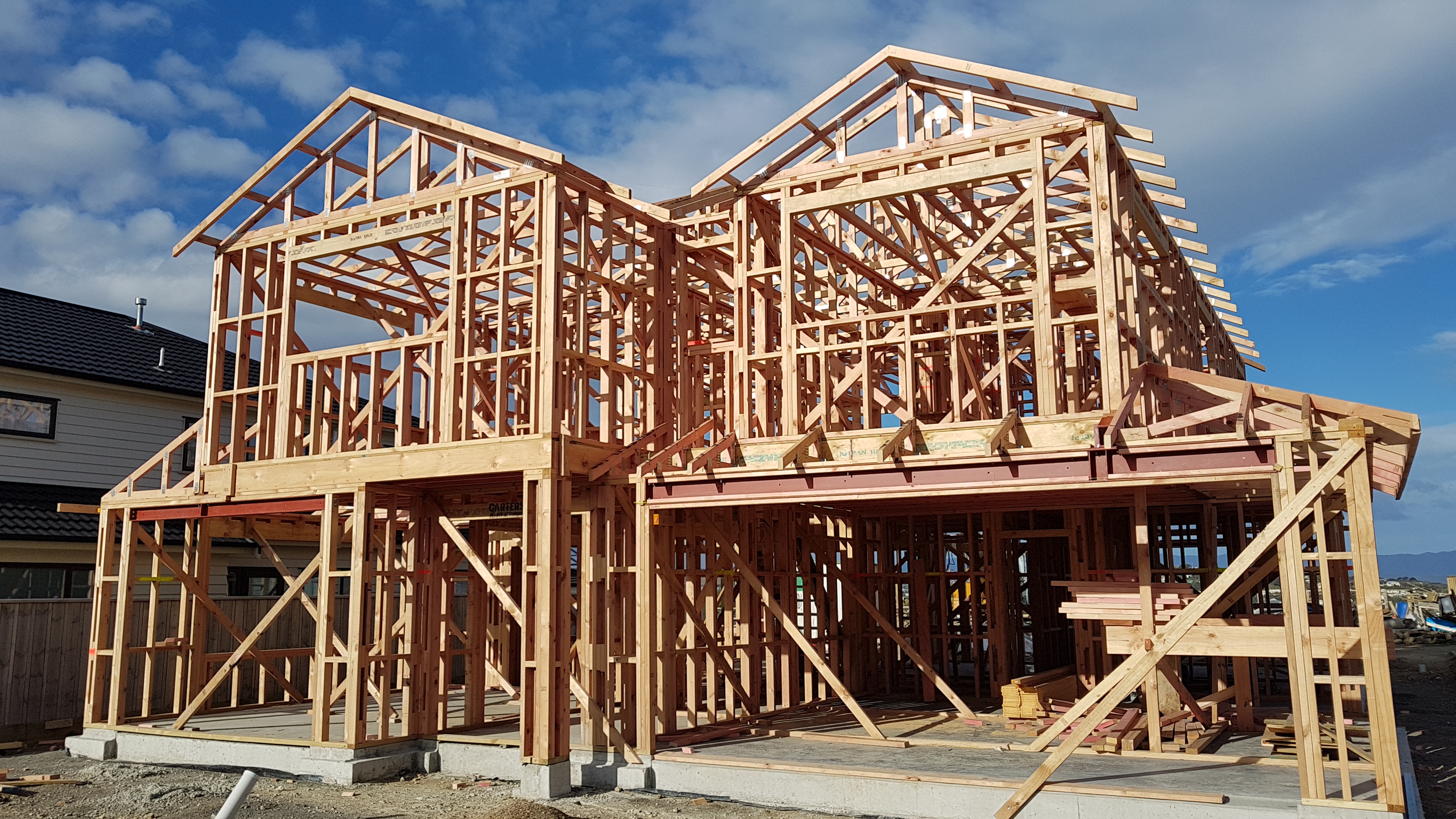
Thermal Regulations for Wooden Houses in Poland
Overview of WT 2021 requirements, U-value limits, calculation methods under PN-EN ISO 6946, and energy class thresholds applicable to new timber construction.
Thermal conductivity by product type
Representative λ values for common wood-based and reference insulation materials. Actual product values appear on CE declarations of performance.
Source: EN 13171, EN 13162, EN 13163 product standards; manufacturer declarations of performance.