Thermal Regulations for Wooden Houses in Poland
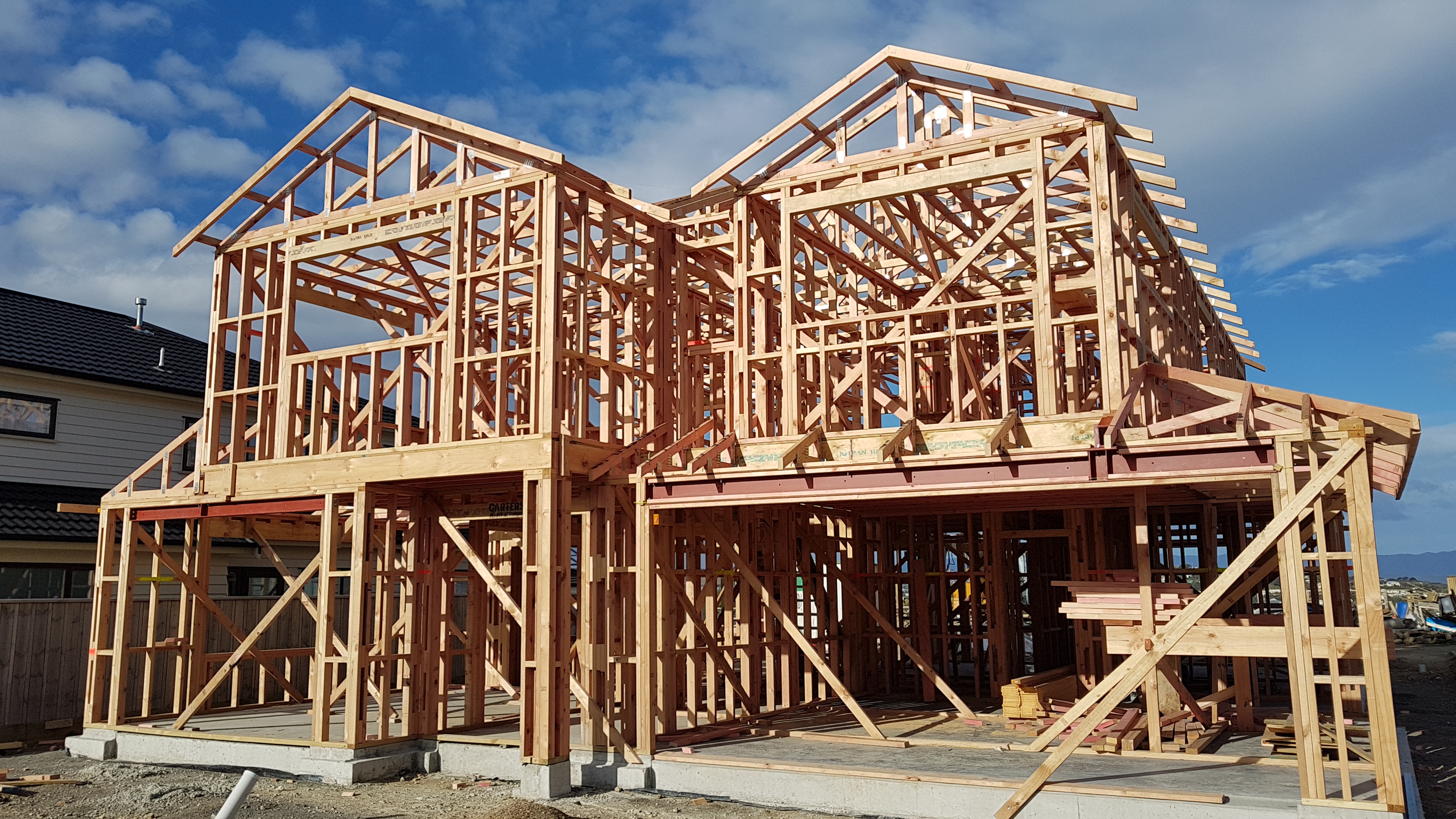
Timber frame house under construction. Source: Wikimedia Commons / L Maule (CC BY-SA 4.0)
Regulatory framework
Thermal performance requirements for buildings in Poland are set by Rozporządzenie Ministra Infrastruktury w sprawie warunków technicznych, jakim powinny odpowiadać budynki i ich usytuowanie — commonly referred to as WT (Warunki Techniczne). The regulation applies to new construction and major renovation projects and is published in the Journal of Laws (Dziennik Ustaw).
The most recent amendment relevant to thermal insulation came into force on 1 January 2021, introducing stricter U-value limits that broadly follow the EU Energy Performance of Buildings Directive (EPBD, 2010/31/EU and its 2018 revision). Poland additionally aligns these thresholds with the concept of Nearly Zero-Energy Buildings (NZEB) required for all new public buildings since 2019 and all new buildings since 2021.
U-value limits from WT 2021
The maximum allowable heat transfer coefficient (U) for building elements in heated residential buildings is specified per element type. The values below apply to the climate zone covering most of Poland (zone III — including Warsaw, Kraków, Poznań, Wrocław):
Walls adjacent to unheated spaces (e.g., garage, storage) have a different limit depending on the temperature difference factor fRsi. The wall separating heated living space from an attached unheated garage requires calculation rather than a fixed tabulated limit.
How U-value is calculated for a timber frame wall
The calculation method is defined in PN-EN ISO 6946 (Thermal resistance and thermal transmittance — Calculation methods). For a multi-layer wall with no significant thermal bridging, the calculation proceeds as:
Ri = di / λi
U = 1 / RT
Where:
- Rsi = 0.13 m²K/W (internal surface resistance, horizontal heat flow)
- Rse = 0.04 m²K/W (external surface resistance)
- di = thickness of layer i in metres
- λi = thermal conductivity of layer i in W/(m·K)
For timber stud frames, the calculation must account for thermal bridging at stud sections. EN ISO 6946 provides the combined method for this: separate U-values are calculated for the bridged section (through the stud) and the unbridged section (through the insulation), then combined in proportion to their fractional areas.
Example: 145 mm stud frame with wood fibre
A simplified example for a 145 mm stud frame at 600 mm centres with 145 mm wood fibre batt fill (λ = 0.038 W/m·K), 18 mm OSB/3 sheathing (λ = 0.13), 60 mm rigid wood fibre external board (λ = 0.042), and 12.5 mm plasterboard (λ = 0.21):
U = 1 / 5.613 = 0.178 W/(m²·K). This is below the WT 2021 limit of 0.20 W/(m²·K) for external walls, before the thermal bridging correction is applied. With a typical bridging correction of ΔU = 0.01 W/(m²·K) for this configuration (due to continuous external board), the corrected U ≈ 0.19 W/(m²·K), still within compliance.
Primary energy indicator (EP)
WT 2021 additionally requires that new buildings meet a limit on the annual primary energy demand indicator EPH+W (heating, ventilation, hot water). For a single-family residential building, the limit is 70 kWh/(m²·year) for the combined heating and domestic hot water load.
This threshold requires a systems-level approach. Achieving EP below 70 kWh/(m²·year) typically involves:
- Well-insulated building envelope (U-values near or below the regulatory limits)
- Mechanical ventilation with heat recovery (MVHR), with heat recovery efficiency above 75%
- Low-emission heating system or heat pump
- Thermal bridge minimisation at junctions (calculated per EN ISO 14683)
The EP calculation is performed by a certified energy auditor (audytor energetyczny) or the building's licensed designer using specialised software and produces the świadectwo charakterystyki energetycznej (energy performance certificate).
Polish climate zones and design temperatures
Poland is divided into five climatic zones for heating purposes. The external design temperature Te varies from -16°C (zone I, mild western regions) to -24°C (zone V, northeastern corner). The insulation thickness required to achieve a given U-value does not change with zone; however, the energy demand calculation and the EP indicator are directly affected by the design temperature.
For wood fibre insulation specification purposes, zone assignment affects the choice of vapour control strategy rather than the λ target: colder zones with longer heating seasons accumulate more moisture in the wall structure during winter, making dynamic hygrothermal assessment more relevant.
Compliance documentation
For a building permit (pozwolenie na budowę) or notification (zgłoszenie budowy), the thermal calculations must appear in the project documentation prepared by the licensed designer. This includes:
- Thermal transmittance calculations for all external elements (U values)
- Condensation risk assessment for opaque envelope elements
- Energy performance certificate or preliminary EP calculation
Insulation products used must have CE marking and the declaration of performance must be available. Substitution of a product during construction for one with a different λ value requires a formal design amendment.